Last updated November 18, 2026
Utilities for an ADU: Water, Sewer, Power and Meters
Most homeowners building an accessory dwelling unit spend their early planning hours on finishes, floor plans, and roof lines. Then the utility quote arrives and rearranges the whole budget. The four connections – water, sewer, electrical, and gas – are the most consistently underestimated line item in an ADU project, and in Sunrise Manor the picture is more particular than most guides admit. Parts of the valley carry aging distribution infrastructure, and NV Energy’s interconnection requirements add their own layer of review. This guide walks through each utility category, the agency behind each approval, the separate-meter question, and how to scope an electrical design so an ADU doesn’t quietly force a service upgrade you never planned for. We’ll also get into how solar and battery storage fit into a metered or shared arrangement. Read it before you lock in your numbers.
Quick Answer
An ADU needs four utility scopes handled: water service through the Las Vegas Valley Water District, sewer through Clark County, electrical through NV Energy, and gas through Southwest Gas if you’re tying in at all. Each connection carries its own review and its own fee, and the total is often the largest underestimated line in an ADU budget. In Sunrise Manor, the biggest cost driver is usually whether your existing service lines can be tapped or a new lateral is required – and whether NV Energy’s load calculation pushes the main panel to a 400A upgrade.
Table of Contents
- What Utilities Does an ADU Actually Need?
- Water Service: LVVWD Connections and Lateral Decisions
- Sewer: Clark County Review and Lateral Tie-Ins
- Electrical: NV Energy Load Calculations and the 400A Question
- Gas: Southwest Gas and When to Skip It
- The Separate-Meter Question: Should Your ADU Have Its Own Meters?
- Solar and Battery Storage With a Metered ADU
- Sequencing Utility Work: The Order That Saves Time
What Utilities Does an ADU Actually Need?
Every habitable ADU needs water, sewer, and power. Gas is optional. That’s the short version. The longer version is that each of those three mandatory connections is governed by a different agency, each with its own approval path and its own fee structure, and none of them talk to each other automatically. You coordinate them.
Here’s who approves what in Sunrise Manor and the surrounding Clark County area:
- Water: Las Vegas Valley Water District (LVVWD) handles the water service connection, meter placement, and any new lateral work.
- Sewer: Clark County reviews and approves sewer lateral connections and the associated plan check. In some conditions a septic system may be part of the picture, but most Sunrise Manor lots are on public sewer.
- Electrical: NV Energy owns the service interconnection. Clark County building department reviews the electrical plan itself, but the load calculation that determines your service size has to pass NV Energy’s interconnection review.
- Gas: Southwest Gas handles gas service. If your ADU is all-electric – which more and more are – you can skip this category entirely.
In our experience working ADU projects, the utility scope is where budgets move most. Homeowners expect framing and finish costs to be the wild cards. Usually it’s the utility category that surprises them. Knowing which agency owns which piece keeps you from chasing the wrong department when something slows down. Building an ADU in Sunrise Manor is genuinely a coordination exercise as much as a construction one.
Every project we take on runs through the same first step: sitting down with the lot, the existing service, and the county’s requirements side by side before any design is finalized. If you want to understand the full build picture beyond utilities, our overview of Casita Builders Sunrise Manor covers the three ADU pathways we work in.
Water Service: LVVWD Connections and Lateral Decisions
The first decision on water is whether the ADU taps into the existing main-home line or needs its own service lateral from the street. That single question determines most of the water cost, and it’s answered by looking at the size and condition of the existing line, the ADU’s distance from the meter, and what LVVWD requires for your specific lot.
When an existing line can be tapped, an ADU shares the home’s water service through a sub-meter arrangement. When LVVWD requires a new lateral, the ADU gets its own line from the street, its own meter, and its own connection fee. Older neighborhoods in Sunrise Manor are more likely to hit the second scenario – not because of any code rule, but because a service line sized for one house may not carry a second dwelling without upsizing.
Here’s the general sequence we follow for water:
- Locate and assess the existing service line, including size, material, and approximate condition.
- Confirm the ADU’s domestic demand and irrigation demand against what the existing line can carry.
- Submit the connection request to LVVWD with the site plan and proposed meter location.
- Pay the connection fee and schedule the tap or lateral installation.
- Coordinate the inspection with the general build inspection schedule so water and framing sign-offs don’t collide.
Getting the LVVWD piece right early matters because a new lateral means street work, and street work means scheduling with the district’s crew availability. That’s not a step you want to discover after framing is up. Sunrise Manor’s summer heat also makes outdoor trench work less forgiving, so front-loading water service in the cooler planning months tends to go smoother than scrambling later.
If your project includes a garage conversion, the water picture is often simpler because the existing service may serve the converted space without a new lateral. Our ADU builders team walks through which pathway suits your lot best before design begins.
Sewer: Clark County Review and Lateral Tie-Ins
Sewer connections in the Sunrise Manor area run through Clark County review, and the key question is whether the existing lateral can absorb an additional fixture load from the ADU or whether the lateral needs replacing or upsizing. A typical ADU adds a bathroom, a kitchen, and sometimes a laundry – real fixture units that the sewer lateral has to carry.
What the county looks at:
- Fixture units: The ADU’s plumbing fixtures add to the load on the existing sewer lateral. If the existing line was already near its capacity for its material and slope, a replacement or upsizing is likely.
- Lateral condition: Older cast iron or clay laterals may be at the end of their service life. If a camera inspection shows damage or root intrusion, the county generally requires repair as part of the ADU approval.
- Slope and depth: The ADU’s fixture locations have to drain correctly to the existing tie-in point, which sometimes forces a re-routed connection rather than a direct tap.
- Septic scenarios: A minority of Sunrise Manor area lots are on septic. In those cases the county health authority reviews the existing system’s capacity, and sometimes the ADU triggers an upgrade to the leach field or tank.
One thing that surprises a lot of homeowners: the sewer review isn’t just about whether water flows. It’s about whether the system can handle the additional load over the life of the ADU. If your existing lateral is a tired line from decades of service, the county will want that addressed now, not five years from now when it fails. In our experience, budgeting for a camera inspection of the sewer lateral during the planning phase is cheap insurance against discovering a problem mid-construction.
County plan check timelines are set by the county, so we always confirm the current review window with the building department before committing to a schedule. That’s part of the written estimate we put together for every project, and it’s the number that sets what you actually spend.
Electrical: NV Energy Load Calculations and the 400A Question
Electrical is where the most expensive surprises hide in ADU projects. It’s also where a little design work up front can save you five figures. The single biggest electrical variable is whether your existing main panel can carry the ADU’s load, or whether NV Energy’s review pushes you into a 400A service upgrade.
Here’s how that decision typically plays out:
- Calculate the existing load. A load calculation looks at the main home’s existing service size, its current demand, and what capacity remains for the ADU.
- Calculate the ADU’s demand. An all-electric ADU with a heat pump, induction cooking, and an EV-ready outlet adds meaningful demand. A gas-heated ADU with simpler equipment adds less.
- Compare against the panel’s capacity. If the existing panel is already near capacity, the load calculation may push toward a service upgrade rather than a subpanel.
- Submit the design to NV Energy for interconnection review. This step is where the utility confirms whether your proposed service arrangement meets its requirements.
- Undersize the design where you can. If a 400A upgrade is triggerable but avoidable, adjusting the ADU’s electrical scope (heat pump size, cooking appliance type, EV charger amperage) can keep the project on the existing service.
This is where scoping your electrical design deliberately pays off. Sometimes swapping one appliance choice – say, going with a smaller heat pump or a lower-amperage EV outlet – is what keeps the main panel out of the 400A conversation entirely. That’s a conversation to have with your designer, not after the panel has already been ordered.
The 400A upgrade scenario is tied to the specific load calculation for your home and lot. If you’re considering a prefab unit from Abodu or Cover, the manufacturer’s electrical spec adds to your load picture, and it has to be run through the same calculation. We work with those brands and can walk through the electrical load implications of a specific model before you commit. For a broader view of how we approach the full ADU scope, our Sunrise Manor page lays out the local service picture.
Gas: Southwest Gas and When to Skip It
Gas is the simplest of the four categories because it’s optional. If your ADU is all-electric – which is increasingly the standard for new construction – you can skip Southwest Gas entirely and eliminate an entire connection fee and coordination step from the project.
When gas does come into the picture, Southwest Gas handles the service connection and the review of the gas line design. A typical scenario is an ADU with a gas range, a gas tankless water heater, or gas heating. In those cases, the service connection ties into the existing meter or requires a new service, depending on the size of the added demand.
Here’s the case for going all-electric in a Sunrise Manor ADU:
- No gas connection fee and no Southwest Gas coordination step.
- One less utility inspector and one less agency in the review chain.
- Future-proofing: all-electric ADUs fit the direction of both appliance availability and grid incentive trends.
- Fewer safety and code considerations inside the ADU, since there’s no combustion appliance to vent.
Gas is a legitimate choice for some homeowners, particularly if they have a strong preference for a gas range or a specific water heater arrangement. But it’s worth making that decision on purpose. If you’re already going through LVVWD and NV Energy reviews, adding a Southwest Gas connection is one more approval in the chain. The trade-off is yours to weigh, and we’ll help you scope it either way.
The Separate-Meter Question: Should Your ADU Have Its Own Meters?
Clark County allows but does not require separate metering for ADUs. That single fact is the hinge on a surprisingly large financial decision, and the right answer depends on who’s going to live in the unit – a renter, a family member, or a future resale buyer.
Separate meters mean the ADU has its own water, electric, and gas meters, and the tenant pays those utilities directly. Shared meters mean the ADU’s utilities run through the main home’s meters, and the owner handles the bills. Here’s the trade-off comparison:
- For a landlord (rental ADU): Separate meters usually win. A tenant who pays their own utilities tends to be more careful with usage, and there’s no bill-splitting arrangement to negotiate. Separate meters also make the ADU look like a standalone unit to future tenants and to a future buyer. The downside is higher upfront cost – each new meter is its own connection fee and its own inspection.
- For an owner-occupant (family ADU): Shared meters usually win. If a family member lives in the ADU, splitting bills is a conversation you’ll have anyway. Separate meters add cost without solving a real problem. Most owner-occupants are better served keeping it simple.
- For a future resale scenario: Separate meters tend to hold value. An ADU with its own meters can be marketed as a fully independent unit, which matters more to some buyers than others. It’s worth thinking about now, because retrofitting separate meters later is a bigger job than installing them during construction.
We’ve seen both choices work well in Sunrise Manor ADU projects, and the deciding factor is almost always who’s going to be in the unit within a few years. If you plan to rent it, meters now. If you plan to keep it in the family for the long haul, don’t over-engineer it.
A note for anyone considering a room addition contractor path instead of a detached ADU: a connected addition typically doesn’t trigger separate-meter questions at all, because the space is part of the primary dwelling. If you’re weighing a connected room addition against a detached casita, the meter question is one of the real structural differences between the two.
Solar and Battery Storage With a Metered ADU
Solar adds a layer that most ADU guides skip entirely, and it’s a layer that matters more when the ADU has its own meter. NV Energy’s net metering rules govern how a solar array’s production is credited on each meter, and how the credit flows depends on whether the array sits on the main home, the ADU, or both.
The core question: can a shared solar array on the main home serve a separately metered ADU? The answer depends on the meter arrangement and how NV Energy’s net metering rules apply to your specific service setup. In general:
- Single meter (shared): A solar array on the main home can offset the ADU’s usage because both draw from the same meter. This is the simplest pathway if you want solar to benefit both units.
- Separate meters: A solar array on the main home cannot directly offset the ADU’s separately metered usage under standard net metering. Each meter’s solar production and credits are tracked separately, so if the ADU has its own meter, it needs its own solar or a different arrangement.
- Battery storage: Adding a battery to the main home can help manage demand at the main meter, but it doesn’t route power to a separately metered ADU. Batteries serve the meter they’re connected to.
The practical takeaway: decide on the meter arrangement before you decide on solar, not the other way around. A homeowner who wants one solar array to serve both units should keep both units on one meter. A homeowner who wants separate meters for rental purposes should plan for either a second solar array on the ADU or accept that the ADU’s electric bill runs separately. Either choice is fine – it just has to be made in the right order, during design, not after interconnection review.
For a prefab unit from Dvele, the solar and electrical spec of the unit itself also becomes part of this picture. We can walk through the electrical and solar implications of a specific model against your meter and NV Energy setup before you commit to a design.
Sequencing Utility Work: The Order That Saves Time
Utility work isn’t a single phase – it’s a sequence that threads through the whole build, and getting the order right saves both time and money. Here’s the sequence we use on ADU projects in Sunrise Manor and the surrounding area:
- Plan phase: Confirm existing water, sewer, and electrical service capacities. Decide on separate meters or shared meters. Decide whether the ADU will be all-electric or gas-inclusive. Any solar or battery decisions get made here too.
- First submittals: File with LVVWD for water, Clark County for sewer, and NV Energy for electrical interconnection review. These run in parallel, and starting them early is what keeps utility work off the critical path.
- Design lock: Freeze the electrical scope so the load calculation is final. If the load calculation points to a service upgrade, resolve the panel and service decisions before framing.
- Rough-in: Water and sewer laterals are installed and inspected during rough construction. Electrical service is roughed in and inspected.
- Meter installation: New meters (if separate metering is chosen) are installed and inspected by the appropriate agency.
- Final inspections: Water, sewer, electrical, and gas final sign-offs run in coordination with the general building final.
- Solar interconnection: If solar is part of the project, the final NV Energy interconnection for the array happens near the end, once the meter arrangement is locked.
Two sequencing rules matter most. First, LVVWD’s street work and NV Energy’s interconnection review need lead time; starting them in the plan phase rather than the rough-in phase is what keeps your build schedule honest. Second, meter decisions have to be made before solar decisions, not after, because the two are coupled.
Building an ADU and only an ADU means we’ve run this sequence enough times to know where the friction points sit. Our technicians have up to 11 years of experience across ADU-category work, and the utility sequencing on a typical Sunrise Manor project is the part we spend the most planning time on. We’d rather over-plan the utilities than retrofit them.
Common Mistakes to Avoid
- Budgeting utilities as a single line item. Water, sewer, electrical, and gas each carry their own connection fees and their own approval timelines. Bundling them in one line blurs which one is actually your big spend, and that’s usually electrical.
- Not inspecting the existing sewer lateral first. A tired lateral that shows up as a problem during rough-in can force a re-routing or replacement you didn’t budget for. A camera inspection during planning avoids the surprise.
- Assuming the existing water service can always be tapped. In older Sunrise Manor neighborhoods, the service line may be sized for one dwelling only. Confirm with LVVWD before design freezes.
- Locking in solar before deciding on meters. If the ADU will be separately metered, a shared solar array on the main home won’t offset the ADU’s usage under standard net metering. Sequence the meter decision first.
- Triggering a 400A service upgrade that could have been avoided. Appliance choices – heat pump size, cooking appliance type, EV charger amperage – move the load calculation. Choose them deliberately during design, not after panel order.
- Skipping the Southwest Gas decision when going all-electric is easier. Gas is optional. Each additional utility in the chain is another approval and another inspection. Decide on purpose.
- Assuming prefab is simpler from a utility standpoint. A prefab unit from Abodu, Cover, or Dvele still needs the same water, sewer, and electrical connections on your lot. The manufacturer handles the unit; the site work is still yours to scope.
When to Call a Professional
Utility coordination for an ADU is not a DIY category. Water laterals, sewer tie-ins, and electrical service work are all permit-driven scopes, and in Sunrise Manor the combination of LVVWD, Clark County, and NV Energy reviews means you’re coordinating three agencies with overlapping timelines. Mistakes here don’t just cost money – they cost weeks of schedule, because re-submittals and re-inspections are slow. If your project involves any of the following, it’s a call-for-help situation: a load calculation that pushes toward a 400A upgrade, a sewer lateral that may need replacement, a water service that’s near the edge of its capacity, or a solar and meter arrangement you haven’t fully worked through. Casita Builders Sunrise Manor offers free estimates in Sunrise Manor. Call (888) 329-9931. We answer 24/7. Fast dispatch from 7am to 7pm, Sunday through Friday. Every estimate includes a written line-item scope so the utility category isn’t a mystery number.
Frequently Asked Questions
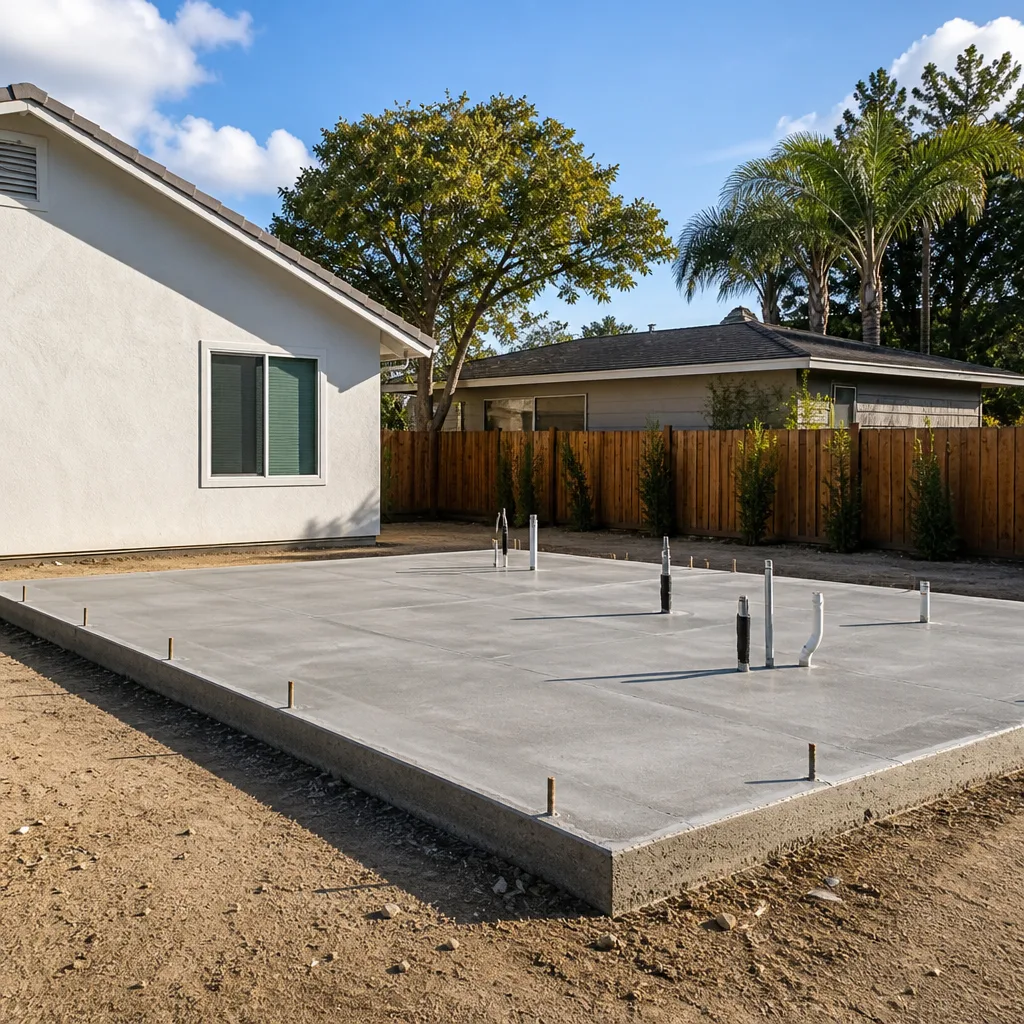
Utility connections for an ADU in Sunrise Manor typically run $12,000 to $18,000 total across water, sewer, electrical, and gas, with electrical usually the largest share because of NV Energy interconnection review and any service upgrade the load calculation triggers. The lower end is usually a scenario where the existing service can be tapped and the ADU stays on the main panel; the higher end is a new lateral, new meters, and a service upgrade. Call (888) 329-9931 for an exact quote – estimates are free.
Clark County allows but does not require separate metering for ADUs, so the answer is yours to make. Separate meters usually make sense for a rental ADU because the tenant pays utilities directly, and they tend to hold value at resale. Shared meters usually make sense for an owner-occupant ADU where a family member lives in the unit. Call (888) 329-9931 to talk through which arrangement fits your plan.
Sometimes, not always. The trigger is the load calculation NV Energy reviews – if the existing panel is already near capacity and the ADU’s demand pushes it over, a 400A service upgrade becomes the path. Adjusting the ADU’s electrical scope (heat pump size, cooking appliance type, EV charger amperage) can often avoid the upgrade. In our experience, homeowners who scope the electrical design deliberately in the plan phase are the ones who avoid it. Call (888) 329-9931 for a load review before you order equipment.
Not under standard net metering. If the ADU has its own meter, the solar array on the main home can’t offset the ADU’s usage because the credits are tracked per meter. A homeowner who wants one array to serve both units should keep both on one meter. One who wants separate meters for rental purposes should plan for a second array or accept that the ADU’s bill runs separately. Call (888) 329-9931 to map your solar and meter arrangement before design freezes.
Yes, we coordinate the permits and inspections for the full utility scope – LVVWD water connection, Clark County sewer review, NV Energy electrical interconnection, and Southwest Gas if gas is part of the project. Our written line-item estimate shows the permit and inspection line items separately so you can see what’s driven by which agency. Call (888) 329-9931 for a free estimate with the utility scope broken out.
The utility schedule depends on agency review windows and the sequencing of the overall build. LVVWD, Clark County, and NV Energy each set their own review timeline, so we confirm the current windows with each agency before we finalize the schedule in the written estimate. What we can say is that starting the utility submittals in the plan phase rather than during rough-in is what keeps them off the critical path. Call (888) 329-9931 and we’ll scope the utility timeline for your lot.
The Bottom Line
Utilities are the line item most likely to move an ADU budget after planning begins, and in Sunrise Manor the combination of LVVWD water review, Clark County sewer review, and NV Energy interconnection makes the category worth understanding early. The four scopes – water, sewer, electrical, and gas – each carry their own agency, their own fee, and their own timeline. Separate metering is allowed but not required in Clark County, and the right choice depends on renting versus owner-occupancy. Solar and battery decisions have to come after the meter decision, not before. And the electrical design is the one place where deliberate scoping saves the most, because a 400A upgrade is sometimes avoidable with the right appliance choices. Get the utility picture in the spreadsheet from day one, and the rest of the budget stays honest.
We build ADUs and only ADUs. Whether you’re converting your garage, building from the ground up, or exploring a prefab unit from Abodu, Cover, or Dvele, we’ll help you find the right fit. A casita should feel like a home, not an afterthought.
Ready to put real numbers behind the utility scope? Call Casita Builders Sunrise Manor at (888) 329-9931 for a free estimate. We answer 24/7. Fast dispatch from 7am to 7pm, Sunday through Friday.
Written by the team at Casita Builders Sunrise Manor.